Why Traditional Team Building Fails (And What Actually Works)
Why Traditional Team Building Fails (And What Actually Works)
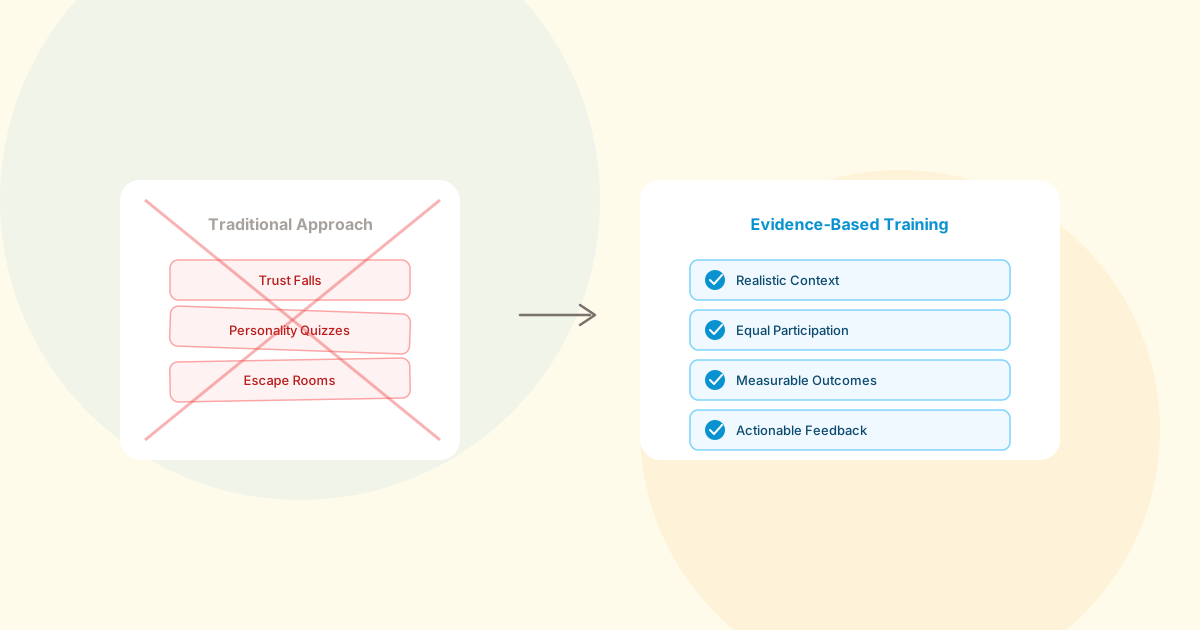
Every year, organisations spend billions on team-building activities. Escape rooms, cooking classes, ropes courses, personality quizzes — the list goes on. And while these events can be enjoyable, there's a growing body of research suggesting they rarely deliver lasting improvements in team performance.
So what's going wrong? And more importantly, what actually works?
The Problem with Traditional Approaches
Most team-building activities share a fundamental flaw: they operate outside the context of real work. Building a tower from spaghetti and marshmallows is a fun afternoon, but it has almost nothing in common with the challenges your team faces on Monday morning.
Research from the Journal of Organizational Behavior consistently shows that skills developed in artificial settings struggle to transfer to the workplace. Psychologists call this the transfer problem — the gap between where learning happens and where it needs to be applied.
There are three specific issues:
1. Low-stakes environments don't build real skills
When there's no pressure, there's no need to develop the coping mechanisms that matter. Real teamwork gets tested during tight deadlines, competing priorities, and incomplete information — not when you're trying to solve a puzzle for fun.
2. Dominant voices stay dominant
Traditional activities rarely change team dynamics. The same extroverted, senior members tend to lead, while quieter voices remain unheard. Without structured mechanisms to ensure equal participation, existing power dynamics simply replicate.
3. No measurement, no improvement
How do you know if your team actually improved? Most team-building events end with a debrief conversation and good vibes, but no concrete data. Without measurable outcomes, there's no way to identify specific areas for growth.
What the Research Says Works
The most effective team development programmes share several evidence-based characteristics:
Realistic context
Teams learn best when they practise in environments that mirror their actual work challenges. Harvard Business School's research on simulation-based learning shows that realistic scenarios create neural pathways that activate in real situations — something abstract exercises can't replicate.
Psychological safety with real stakes
Google's famous Project Aristotle found that psychological safety is the number one predictor of team effectiveness. But safety doesn't mean comfort — it means creating an environment where people can take risks, make mistakes, and learn without fear of blame, while still feeling the weight of meaningful decisions.
Equal participation by design
Research from MIT's Human Dynamics Laboratory shows that the best-performing teams share one trait: equal distribution of conversational turn-taking. When platforms are designed to ensure every team member contributes, rather than hoping they will, outcomes improve dramatically.
Actionable feedback loops
The most effective learning happens when teams receive specific, timely feedback on their performance. Not vague encouragement, but concrete data: How did your communication patterns affect outcomes? Where did decision-making break down? What would have happened if you'd chosen differently?
A Better Way Forward
The next generation of team development tools are built on these principles. Rather than pulling teams out of context for a fun day, they immerse teams in realistic scenarios where decisions carry weight, every voice matters, and performance is measurable.
At Excelled Team, we've designed our simulations around this exact research. Teams take on executive roles in realistic crisis scenarios, navigate interconnected decisions together, and receive detailed analytics on their collaboration patterns afterwards.
It's not about replacing team social events — those have their place. It's about recognising that genuine team performance improvement requires genuine practice, just like any other skill.
Key Takeaways
- Context matters: Skills transfer best when practised in realistic settings
- Structure participation: Don't hope for equal voices — design for them
- Measure everything: If you can't quantify improvement, you can't manage it
- Embrace productive pressure: Comfort zones don't build capability
Ready to try an evidence-based approach to team development? Get started with Excelled Team and see the difference for yourself.